

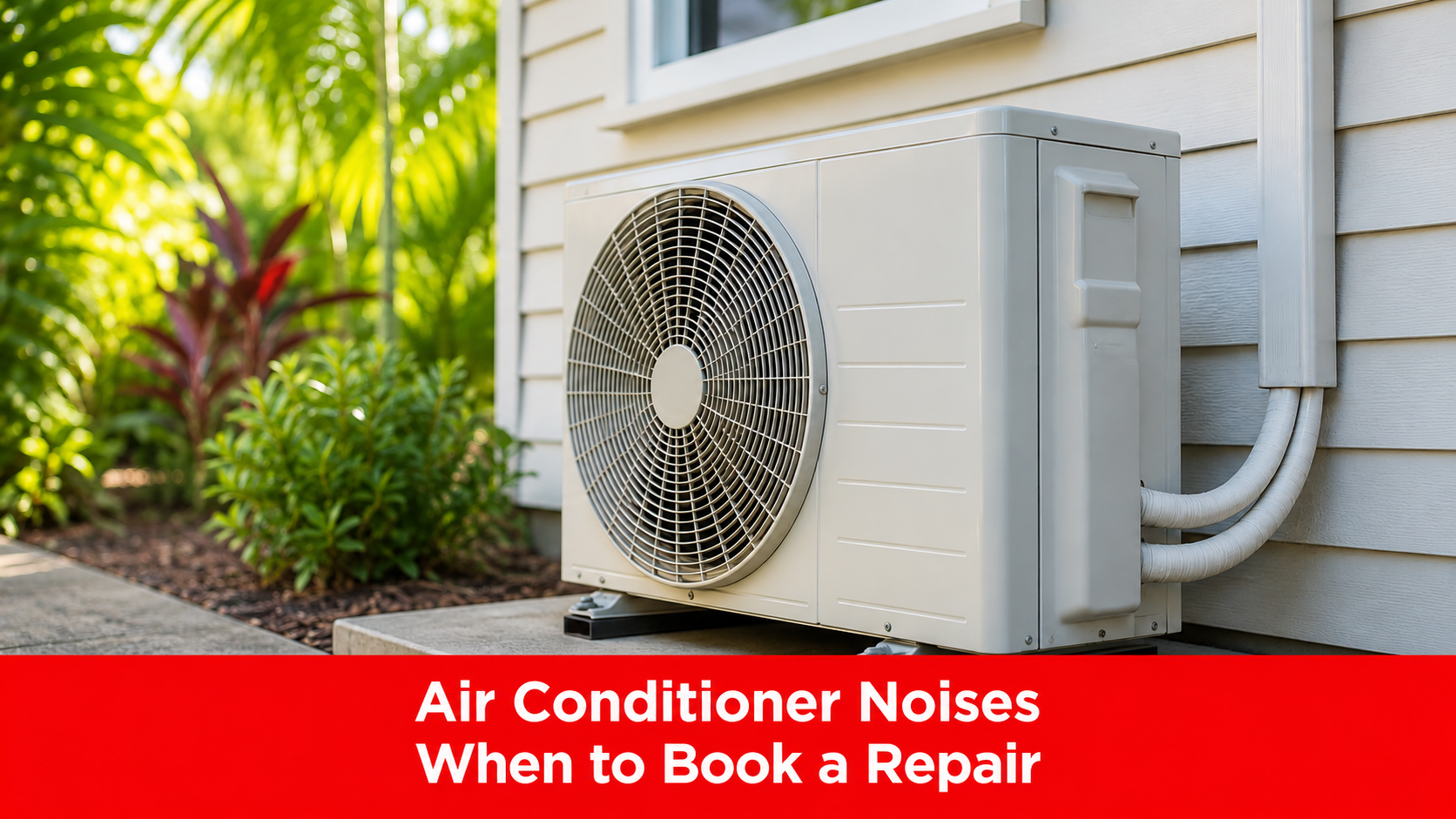
A new rattle from your air conditioner can be hard to ignore, especially when it starts just as you settle down for the evening. The important question is whether you are hearing an ordinary operating sound or a change that needs professional attention. A noise on its own cannot identify a failed component, but the way it begins, changes and affects cooling can help a technician investigate.
If you rely on air conditioning in Proserpine, this guide explains what to notice, when to stop using the system and what information to prepare for a repair visit. Air Conditioning Whitsundays provides air conditioning services in Proserpine, including installation, servicing and repairs. Getting an unfamiliar noise assessed gives you a clearer basis for deciding what to do next.
Start with what has changed
Think about how the system usually sounds in the same operating mode. Has a steady background hum become a sharp vibration? Does the noise come from the wall-mounted indoor unit, the outdoor unit or somewhere you cannot confidently locate? Did it begin suddenly, or has it gradually become more noticeable?
These observations are more useful than guessing that the compressor has failed. For example, a sound heard only during start-up is a different report from a continuous scraping noise. Tell the technician whether cooling has also weakened, an indicator light is flashing or water has appeared inside. You do not need to keep a noisy system running to collect evidence; describe what you have already noticed.
Some brief sounds are part of normal operation
Air conditioners contain moving parts and circulate refrigerant, so silence is not a realistic expectation. Depending on the model, brief clicking, flowing or light cracking sounds can occur during operation. Mitsubishi Electric explains in its operating instructions that temperature changes can cause panels to expand or contract, and changes in refrigerant flow can also be audible.
Check the manual for your exact model before assuming a particular sound is normal. Descriptions from another brand or a different system may not apply. A familiar, brief sound with normal performance is different from a new, persistent or unusually loud noise. If you remain uncertain, ask for advice and avoid repeatedly restarting the system to test it.
Rattling and vibration deserve attention
A rattle can have several possible causes. Daikin's noise guidance identifies a loose fan rotor as one possibility and recommends stopping the unit and arranging a licensed technician's inspection. The sound alone does not establish that this is what has happened to your air conditioner.
From a safe distance, note whether nearby objects might be contributing to what you hear. A separate gate or item of outdoor furniture can sometimes make the source difficult to locate. Do not reach through the grille, remove covers, tighten internal parts or place anything on the unit to suppress vibration. Give the technician a clear description and let them assess the equipment and its mounting arrangement.
Stop using a system with abnormal sounds
Loud grinding, scraping or banging should prompt a professional assessment. The same applies when a new noise occurs alongside a burning smell, repeated electrical tripping or an indoor water leak. Use the normal controls to stop the air conditioner where it is safe to do so, follow the manufacturer's safety instructions and contact a qualified technician.
Do not repeatedly reset a tripping breaker or run the system again just to demonstrate the fault. A phone recording you already have may be useful, but obtaining one is less important than stopping abnormal operation. Keep people clear of damaged equipment. If there is smoke, fire or an immediate electrical danger, keep away and seek emergency assistance.
Prepare a useful repair enquiry
A good booking description helps the service team understand the problem before attending your Proserpine property. Gather information that is readily available without opening equipment or climbing to an unsafe position:
- The brand and model, using your paperwork or an easily accessible label.
- Whether the noise seems to come from the indoor or outdoor unit.
- When it first happened and whether it was intermittent or continuous.
- Any change in cooling, airflow, indicator lights or remote-control messages.
- The approximate installation date and details of previous repairs, if known.
Also explain access arrangements. A ground-level outdoor unit beside a driveway presents different access considerations from equipment mounted high on a wall. For a rental or managed property, coordinate access and any necessary owner approval through the appropriate person. Include a contact number so the service team can clarify the symptoms or appointment details.
Use the inspection to compare repair options
A noisy air conditioner does not automatically need replacing. The appropriate response depends on the diagnosed fault, the system's condition and whether suitable parts are available. Ask what the inspection found, what the proposed repair covers and whether anything else needs attention. Request a written scope and cost before agreeing to substantial work.
If replacement is recommended, ask why repair is less suitable in this case. Consider the total installed cost, likely disruption and how well the existing system serves the room. An air conditioning installer in the Whitsundays can assess those requirements. A noise complaint is a reason to investigate; it is not enough, by itself, to choose a replacement size or model.
Check the outcome after the work
Before the technician leaves, ask what sound you should expect during normal operation and whether there are any specific instructions for your system. Keep the service record with the model details and warranty paperwork. If the original noise was intermittent, explain its usual timing so the technician can decide how best to check the result.
Report a returning noise with reference to the completed work and any new symptoms. For routine care after the fault is resolved, follow your model's instructions and the technician's recommendations. Our guide to air conditioning cleaning and maintenance covers the broader upkeep conversation. Cleaning should not be treated as a diagnosis for every noise.
Frequently asked questions
Does a clicking air conditioner always need repairing
No. Some brief clicks are associated with normal operation. Check your model's manual. A new or persistent click, particularly with poor cooling or another symptom, warrants professional advice.
Can I keep using an air conditioner that rattles
Stop the unit and arrange advice when the rattling is new or abnormal. Do not assume it is harmless or try to hold a panel in place while the equipment runs.
Will a service fix a noisy outdoor unit
That depends on the cause. Inspection may identify a repair or another issue that routine cleaning does not address. Ask for the diagnosis and proposed scope before proceeding.
Should I replace an older noisy system straight away
Have it assessed first. Compare the repair scope, parts availability, overall condition and replacement options. Age is useful context, but it does not identify the fault.
Book air conditioning support in Proserpine
If an unfamiliar noise is interrupting your comfort, contact Air Conditioning Whitsundays to discuss an inspection. Tell us where the unit is located and what changed so we can understand the problem. Call (07) 4946 1356 or 0409 368 754, or send an enquiry to our team. We provide air conditioning installation, servicing and repairs across Proserpine and the wider Whitsundays.
