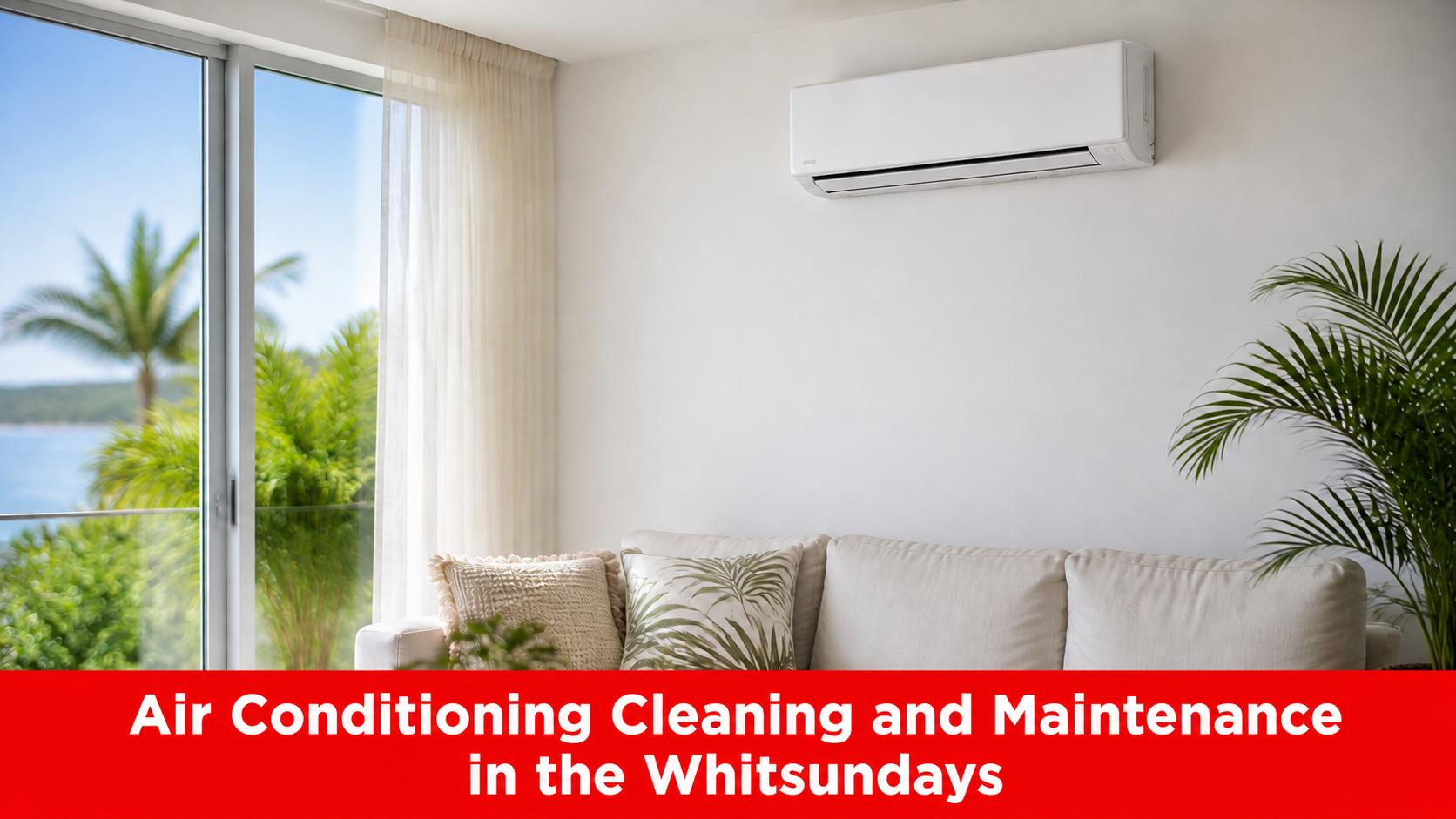
A practical guide to keeping a split or ducted system clean, efficient and ready for the Whitsundays heat and humidity.
Why Whitsundays systems need regular attention
In the Whitsundays, an air conditioner often works hard through long periods of heat and humidity. That workload can expose small performance issues more quickly than in a milder climate. Dust, moisture and everyday airborne particles collect in filters and indoor components, while outdoor units can be affected by weather exposure and coastal conditions. Regular cleaning and servicing do not guarantee that a system will never fail, but they give a technician the opportunity to identify reduced airflow, drainage concerns, unusual noise or worn components before a hot day turns a manageable issue into a comfort problem.
The warning signs that should not be ignored
A system does not need to stop completely before it needs attention. Reduced airflow, rooms taking longer to cool, a musty smell when the unit starts, dripping water, ice forming on parts of the unit, unusual sounds or a sudden increase in running time are all sensible reasons to arrange an inspection. These signs can have different causes, so it is better not to assume that a quick reset or stronger temperature setting will fix the problem. Making a note of when the symptom occurs helps a technician assess the system more efficiently.
Filter care is a useful household routine
Cleaning accessible filters in line with the manufacturer instructions is one of the simplest jobs a household can do between professional services. Filters that are loaded with dust can restrict airflow and make the system work harder to move conditioned air through the room. Before removing a filter, turn the unit off and follow the manual for that model. Do not force parts, use harsh cleaning products or put a damp filter back into the unit. Once it is fully dry, reinstall it correctly. This basic routine supports day-to-day performance, but it is not a substitute for a professional clean and inspection.
What a professional air conditioner service can check
A professional service goes beyond the visible filter. Depending on the system and its condition, the technician may inspect the indoor unit, outdoor unit, drainage, electrical connections, airflow and general operation. The purpose is to check that the system is clean, safe to operate and performing as expected, while identifying concerns that need repair or further assessment. For ducted systems, access points and the condition of the system components also matter. Ask the technician to explain what was checked, what maintenance was completed and whether there are any actions to plan for before the next season.
Humidity, drainage and indoor air comfort
High humidity can make a home feel uncomfortable even when the air conditioner is running. As the system removes moisture from the air, condensate needs to drain correctly. A blocked or poorly functioning drain can lead to water dripping from the indoor unit or visible moisture around the system. This should be addressed promptly rather than managed with towels or repeated restarts. Keeping doors and windows closed while cooling a room, using sensible temperature settings and making sure the system has clear airflow can also help the equipment maintain more consistent indoor comfort.
Coastal exposure and the outdoor unit
Outdoor units need adequate ventilation and safe access for servicing. In coastal areas, weather and salt-laden air can add to the importance of regular visual checks. Keep leaves, garden debris and stored items away from the unit so air can move freely around it. Do not hose inside the unit, bend fins or try to dismantle panels. If the casing appears damaged, the unit is unusually noisy or there are signs of corrosion, book a professional assessment. A technician can determine whether the issue is cosmetic, requires cleaning or needs a repair recommendation.
Choose the right time to book maintenance
The best time to organise routine air conditioning maintenance is before the hottest and most humid period, not when the household is already without cooling. Booking ahead gives more flexibility for a service visit and allows any recommended repair work to be planned without the pressure of a heatwave. Households with several systems, rental properties or business premises may benefit from a regular maintenance schedule so the work is not forgotten. A service record also creates a useful history of the equipment, previous repairs and the timing of future checks.
Simple steps that protect the system between services
Use the system as intended, clean accessible filters when required, keep the outdoor area clear and act early when performance changes. Avoid setting an extreme temperature in an attempt to cool a room faster; the system still needs time to remove heat and humidity. If a unit is leaking, tripping power, producing a burning smell or making a sharp mechanical noise, switch it off and arrange professional help. A calm, early response is more likely to protect the equipment and the household than continuing to run a system that is showing a clear fault.
Maintenance planning for homes and businesses
A maintenance plan should suit the way the property uses air conditioning. A bedroom unit that runs at night has different demands from an open-plan living area, office, accommodation property or retail space that operates daily. Consider the number of units, the age of the equipment, the level of exposure and how disruptive a breakdown would be. Air Conditioning Whitsundays can provide cleaning, maintenance, repairs and installation support across the region, helping property owners plan routine care around their actual cooling needs rather than waiting for a failure. Contact the team before the tropical heat places extra demand on your system.
A practical pre-summer checklist
Before the warmer months, test each system on a mild day and listen for changes in sound or airflow. Check that remotes work, accessible filters are clean and the outdoor area is free from leaves and stored items. Note which rooms are slow to cool or feel humid. This gives the household a clear list to discuss when booking a service instead of trying to remember the issue after it becomes urgent.
Questions to ask at a maintenance visit
Ask what was cleaned, whether drainage and general operation were checked, and whether the technician found any concern that needs monitoring or repair. If the system is older, ask which signs would indicate that repair is no longer the practical option. A clear explanation helps a property owner understand what has been completed and plan future maintenance with confidence.
When a repair needs faster action
Turn the air conditioner off and seek professional help if there is a burning smell, electrical concern, water near electrical components, repeated power tripping or a serious mechanical noise. Do not keep restarting a faulty unit or try to open electrical panels. Early assessment is the safer response and can prevent further damage to the system.
Next step
Contact Air Conditioning Whitsundays to arrange air conditioning cleaning, maintenance or repair support before the tropical heat places extra demand on your system.
Choosing an air conditioning system in the Whitsundays is not the same as choosing one inland. Coastal humidity, salt exposure, holiday-property usage patterns and long cooling seasons all influence which system will perform best over time.
That is why an experienced air conditioning installer in the Whitsundays should look beyond room size alone. The right recommendation depends on how the property is used, how often it is occupied and how much maintenance access and corrosion protection the system will need in local conditions.
Coastal conditions change what a good system looks like
Systems installed around Airlie Beach, Cannonvale and other coastal parts of the region face extra humidity and salt exposure. That can accelerate corrosion and place more pressure on performance if the unit is poorly positioned or not maintained properly.
A good installation therefore starts with the environment. Unit placement, drainage, airflow and maintenance access all matter more when the climate can push systems hard for long periods of the year.
Split system or ducted for homes and holiday properties?
Split systems often suit individual rooms, apartments, smaller homes and staged upgrades because they offer targeted control and simpler replacement options. Ducted systems may suit larger homes or properties where whole-home comfort, cleaner aesthetics and centralised control are a higher priority.
For holiday properties, the right answer also depends on how often the property is occupied and whether owners want zone control to manage running costs when the whole home does not need cooling.
Different towns can have different use patterns
The Whitsundays service area is not one-size-fits-all. Air conditioning needs in Airlie Beach holiday accommodation may differ from a full-time family home in Cannonvale, a residential property in Proserpine or a coastal home in Bowen. Occupancy, sun exposure, house layout and maintenance habits all affect the system recommendation.
That local understanding is useful for search visibility too. A well-structured article can support regional phrases such as air conditioning Airlie Beach, air conditioning Cannonvale, air conditioning Proserpine and air conditioning Bowen while still keeping the main focus on the installer keyword.
Installation details affect long-term efficiency
Many problems blamed on a unit itself are actually installation issues. Poor drainage, undersized systems, awkward condenser placement and limited access for cleaning can all shorten the life of the equipment and reduce performance. In humid climates, those details become even more important.
Choosing the right system is only part of the job. Commissioning, airflow checks, drainage and servicing access should all be part of the install conversation if the client wants reliable performance through peak season.
Local installer knowledge matters after the job is finished
A local installer is not only there for the installation day. Ongoing servicing, cleaning and fault diagnosis are much easier when the provider already understands the property and local climate conditions. That continuity is especially valuable for property owners who do not live on site year-round.
For clients comparing installers, that is one of the real reasons local experience matters. It supports better decisions now and faster support later if the property needs service or repairs.
FAQs
Is split system or ducted better for a Whitsundays home?
It depends on the home layout, occupancy pattern, budget and how much zone control is needed. Both can work well when matched properly to the property.
Do coastal homes need more air conditioning maintenance?
Yes. Salt, humidity and heavy seasonal use can increase cleaning and servicing needs compared with inland installations.
Can one article target Airlie Beach, Cannonvale, Proserpine and Bowen?
Yes, provided the content is genuinely useful for the wider service region and not just repeating place names without context.
If you need an air conditioning installer in the Whitsundays who understands coastal conditions, system selection and long-term servicing, Air Conditioning Whitsundays can help match the right setup to the property.
Choosing the right air conditioning system in Airlie Beach is not only about room size. Coastal humidity, salt in the air, sun exposure, and how often the property is occupied can all affect which system performs best and how long it lasts.
At Air Conditioning Whitsundays, we help homeowners, unit owners, and local businesses compare practical options for Airlie Beach properties and nearby areas such as Cannonvale and Proserpine. If you need installation support across the region, see our air conditioning installer Whitsundays service page.
What Airlie Beach properties usually need
Correct system sizing for open-plan living areas, units, and family homes.
Practical indoor and outdoor unit placement for airflow, noise, and access.
Advice on how often the property is occupied, especially for holiday or short-stay use.
Reliable brands and installation methods suited to humid coastal conditions.
Coastal conditions change the decision
Airlie Beach properties deal with heavy humidity and salt exposure, so installation quality matters. The right location for the outdoor unit, sensible drainage planning, and choosing equipment that suits the property all help reduce long-term issues.
For clients comparing Airlie Beach and Proserpine installations, the local conditions are a little different. Proserpine properties are still humid, but the coastal exposure is usually lower, which can affect placement and maintenance priorities.
When to replace instead of repair
If your current system struggles to cool the room, cycles too often, or has become expensive to keep repairing, replacement can be the better long-term option. A new system can improve comfort, reduce energy waste, and better suit how the property is used today.
Need advice before booking installation?
If you want help choosing the right air conditioning setup for an Airlie Beach or Proserpine property, call Air Conditioning Whitsundays on (07) 49 461356 or contact us for a quote. You can also review our Whitsundays installation service page for broader regional installation support.
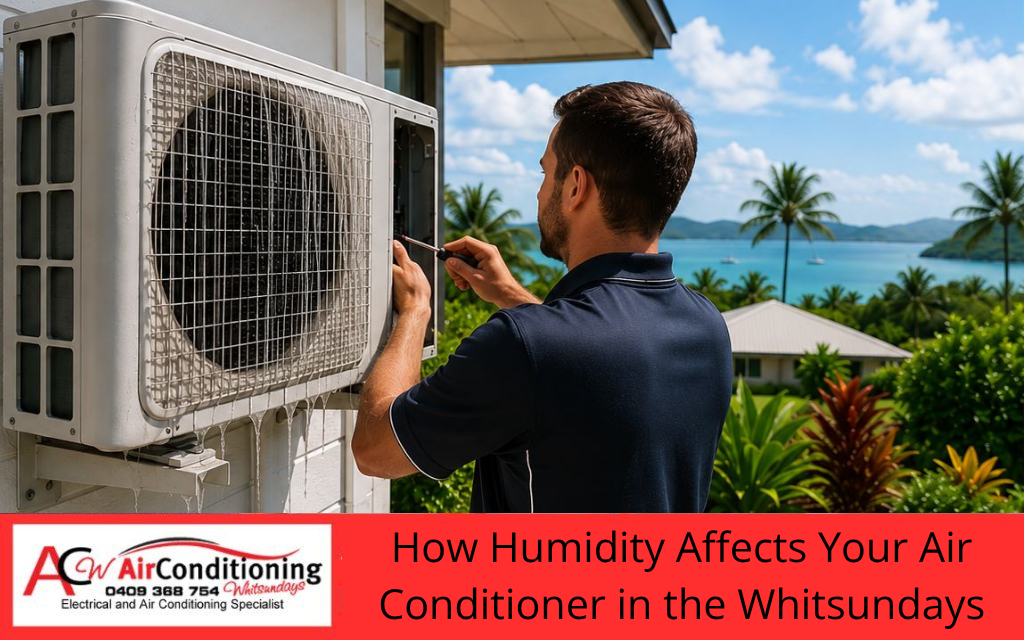
High humidity makes your air conditioner work harder because it has to remove moisture from the air while cooling your home. In the Whitsundays, that extra load can reduce efficiency, increase wear on components and leave your home feeling sticky even when the temperature is set correctly.
What makes the Whitsundays climate hard on air conditioners?
The Whitsundays climate combines high temperatures, salt air and persistent humidity for much of the year. That means your unit is not just cooling the air. It is also trying to remove excess moisture so your home feels comfortable.
When humidity levels stay high for long periods, air conditioners often run for longer cycles, produce more condensation and experience greater strain on filters, coils and drainage components.
How humidity impacts air conditioner performance
Humidity changes how cool air feels. Even when your system is lowering the temperature, high moisture levels in the air can make rooms feel warmer and heavier than they should.
The unit has to work harder to dehumidify as well as cool.
Longer run times can increase power consumption.
Moisture build-up can contribute to mould, odours and drainage issues.
Extra strain can shorten the life of important components.
Signs your air conditioner is struggling with humidity
One of the clearest warning signs is when the house still feels damp or clammy even though the system is running. Other indicators include weak airflow, slow cooling, excessive condensation, musty smells and water leaking around the indoor unit.
You may also notice that the system runs constantly without delivering the comfort level you normally expect. That can point to blocked filters, dirty coils, poor drainage or a system that is no longer performing efficiently in tropical conditions.
Why your home can still feel sticky or uncomfortable
An air conditioner that is oversized, under-serviced or partially blocked may cool the air too quickly without removing enough moisture. In other cases, the unit may be correctly sized but unable to keep up because filters, coils or drains need attention.
Humidity problems can also be made worse by open doors, poor insulation or rooms that receive strong afternoon sun. That is why comfort issues should be assessed as a whole-home problem, not just a temperature setting problem.
The maintenance steps that matter in humid weather
Routine servicing is one of the best ways to keep your system performing well in Whitsundays conditions. A proper service should include filter cleaning, coil checks, drain inspection, airflow testing and a review of the unit’s overall performance.
Regular maintenance helps reduce the chance of mould growth, prevents blocked drains and improves the system’s ability to control moisture effectively. If your unit is overdue for attention, professional air conditioning servicing and installation support can make a noticeable difference.
When to book a professional air conditioning service
If your system is not cooling properly, is producing unusual smells, leaking water or struggling during humid weather, it is time to book a professional inspection. Prompt servicing can identify whether the issue is related to drainage, airflow, refrigerant performance or general wear.
For Whitsundays homes and businesses, fast action helps avoid more expensive repairs later. If you are concerned about how your system is coping, you can book an onsite quote or service visit here.
Frequently asked questions
Does humidity make an air conditioner work harder?
Yes. High humidity adds extra load because the system must remove moisture from the air as well as cool the room.
Why does my house feel humid even with the air conditioner running?
This can happen when the unit is dirty, poorly maintained, incorrectly sized or struggling with drainage and airflow issues.
What is the ideal humidity level inside a home?
Most homes feel comfortable when indoor humidity stays around 40 to 60 per cent, although conditions vary throughout the year.
How often should I service my air conditioner in the Whitsundays?
Regular servicing is recommended, especially before peak summer demand and whenever you notice reduced performance or excess condensation.
Keep your home comfortable year-round
Humidity is part of life in the Whitsundays, but your air conditioner should still be able to keep your space comfortable. With the right maintenance and timely repairs, you can improve efficiency, reduce wear and avoid the frustration of a system that runs all day without delivering results.
Winter is coming to Whitsunday Island! This means the need to adjust your ceiling fans and reverse split type of air conditioning systems. Therefore, you would want to get your home ready before the winds start to get chilly.
Here are some of the things you might want to consider when preparing your home for Whitsunday winter.
Tip no.1: Run an electrical system inspection
Examine the wiring, ports, connectors, switches, and other electrical components inside your home. These devices get weakened or wear out over time. If you didn't inspect these after summer, some of your electrical devices have likely been damaged by now. Some may even need to be repaired or in some instances replaced to limit the possibility of electrical accidents.
Not sure how to do a proper inspection of your electrical system? A licensed electrician in Whitsundays can help you with that! Call us on (07) 4516 5148 / 07 4516 5148.
Tip no. 2: Add An Additional Power Outlet When Necessary
Most of the time, electrical accidents occur due to the overloading of power outlets. As your family spends more time indoors expect the simultaneous use of appliances. So to help accommodate the increased usage of electricity, it is recommended to add more power outlets to your home.
A licensed electrician can install additional power outlets for your home after an electrical inspection. Avoid DIY installation of power outlets as this can cause more accidents like a short circuit.
Tip no. 3: Maximize Some of Your Appliances
You might not be aware yet but some of your home appliances have a heating mechanism for winter. With the type of mild winter we have at Whitsunday, these heating features shall suffice.
Your reverse split type air conditioner has a reverse feature you can use to heat your room. Instead of using a bar heater that’s not very energy efficient, it is better to use your AC as an alternative. Likewise, your ceiling fan can be used to heat your verandah by setting the blades to a clockwise direction.
Tip no. 4: Prepare An Electrical System Checklist
An electrical system checklist is an important thing to have at home. It guarantees that you will not forget or miss any necessary maintenance and repair your electrical system needs. Here, we included some pointers you should include in your home electrical system checklist for winter.
What should you include in your checklist?
Electrical device inspection including switches, fuses, adaptors, wirings, plugs, smoke alarms, circuit breakers, and appliances.
Locating your home’s main power source and ensuring that you can easily reach the place in case of a sudden power outage. You can also check if the switches inside the switchboard are properly labelled and working.
Ensure that your electrical system is safe from water leakage on roofs, ceiling, walls, and floor. It will also help to check if your air conditioner is leaking.
Trim the tree branches and other obstructions to your power line outdoors.
Turn off appliances when not in use before going to bed.
Ensure that no appliances are left plugged in when going outdoors.
Conclusion
Doing the activities listed above can make your home safe from various electrical accidents this winter. Although there are several things on the list that you can do by yourself, always remember to consult a reliable electrician when necessary.