

Living in the Whitsundays is pretty close to paradise. We've got stunning islands, beautiful beaches, and a relaxed tropical vibe. But we also know that from about October to March, the heat and humidity can be full-on. That’s when a good air conditioner goes from being a luxury to an absolute must-have for a comfortable home.
But what does it actually cost to get one installed?
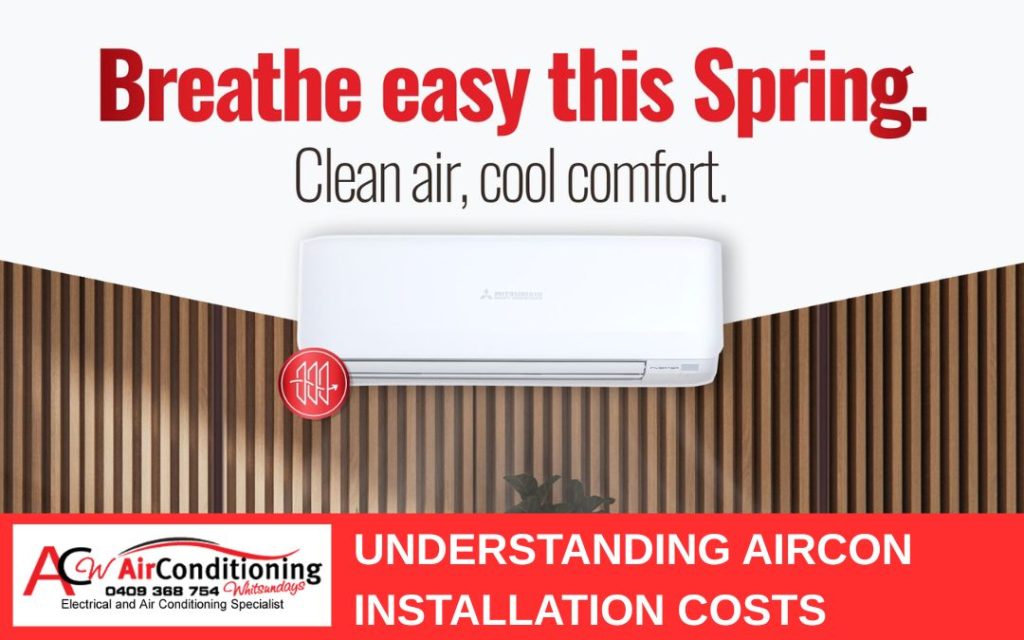
Figuring out the price of air con installation can feel a bit confusing. You might see a cheap price advertised somewhere, only to find out the final bill is much higher. This guide is here to clear things up. We’ll break down all the costs involved, so you know exactly what to expect when cooling your home in Airlie Beach, Cannonvale, Proserpine, Bowen, or anywhere else in our beautiful region.
We’ll even walk you through a real-world example of a local installation to show you how it all adds up.
What's in a 'Standard' Air Con Installation?
You’ll often hear installers talk about a "standard back-to-back" installation. This is the simplest and cheapest type of installation, and it's what most base prices are quoted on.
So, what does it mean?
A back-to-back installation is when you place the indoor unit on a wall that backs onto the outside of your house. The outdoor unit (the big box with the fan) is then placed directly on the other side of that same wall, on the ground.
A standard installation price usually includes:
- A qualified technician to do the job safely.
- Placing the indoor unit on an external wall.
- Up to 3 metres of copper piping and cabling to connect the two units.
- A weather-proof electrical switch (called an isolator) near the outdoor unit.
- Mounting the outdoor unit on a solid, flat surface like a concrete slab or plastic pad.
This is the ideal scenario. But as we know, not all homes are built the same, and that’s where extra costs can come in.
Key Factors That Influence Your Final Installation Cost
Here are the main reasons your installation might cost more than a standard back-to-back job. Understanding these will help you see why your quote might be different from your neighbour's.
1. Installation Complexity
If the indoor and outdoor units can't be placed back-to-back, the job gets more complex.
- Longer Pipe Runs: If the units are further than 3 metres apart, you'll need more copper piping, cabling, and protective ducting to cover it all. This adds extra material and labour costs.
- Internal Walls: Want the indoor unit on a wall in the middle of a room? The pipes will need to be run through the ceiling or under the floor to reach the outside. This takes a lot more time and effort.
- Difficult Placements: Installing an outdoor unit on a second-storey wall, on a balcony, or on a roof requires special brackets, extra safety equipment, and sometimes two technicians, which increases the price.
2. The Type & Size of Your Air Conditioner
Bigger rooms need bigger, more powerful air conditioners. A small 2.5kW unit for a bedroom is perfect for that space, but it won't make a dent in a large, open-plan living area. That’s where you might need a 7kW or 9kW system.
A larger unit is not only more expensive to buy, but it's also heavier and often requires thicker piping and electrical wiring to handle the extra power, which adds to the installation cost.
3. Electrical Work Requirements
Modern air conditioners draw a lot of power. To work safely, they need their own dedicated electrical circuit connected directly to your home's switchboard.
- No Spare Circuits: If your switchboard is already full, our electrician will install a new circuit with your new install; we have both trades.
- Old Switchboard: Handling older switchboards is a critical part of a safe air conditioner installation. Our licensed electrician will assess your current switchboard to ensure it can safely handle the new electrical load.If it's outdated, we will provide a clear, easy-to-understand recommendation for an upgrade. We have extensive experience with homes in this area, so you can be confident the job will be done correctly and safely.
4. Materials & Coastal Corrosion Protection
This one is super important for us in the Whitsundays. The salty sea air is great for a day at the beach, but it’s terrible for metal. The standard steel brackets that might be fine in another town will rust and fall apart here in just a few years.
For a long-lasting installation, you must use:
- Stainless steel or heavy-duty galvanised wall brackets.
- Corrosion-resistant components for the outdoor unit. This adds a small amount to the upfront cost but will save you from having to replace a rusted-out unit down the line.
Your Whitsundays Installation Checklist
Before you say "yes" to any quote, make sure you've covered these bases.
✅ Get at least two quotes. This helps you compare prices and see what a fair market rate is. Be wary of anyone who gives you a price over the phone without seeing your home first!
✅ Check their licences. A proper air con installer in Queensland MUST have an ARCtick Licence. This proves they are qualified and legally allowed to handle both the building work and the refrigerant gas. Don't risk it with an unlicensed handyman.
✅ Ask about warranties. You should get two warranties: one from the manufacturer for the air conditioner itself (usually 5 years), and one from the installer for their workmanship (at least 1 year).
Ready to Beat the Heat?
While air con installation costs can vary, understanding what goes into the final price puts you in control. It's not about finding the absolute cheapest price; it's about getting the best value and a high-quality job that will keep you cool for many Whitsundays summers to come.
If you're ready to get a clear, detailed, and no-obligation quote for your home, get in touch with us. Our team of experts can assess your space and recommend the perfect solution for your needs and budget.
